Showing posts with label hemp. Show all posts

Sunday, January 4, 2015

Cannabis-Based Batteries

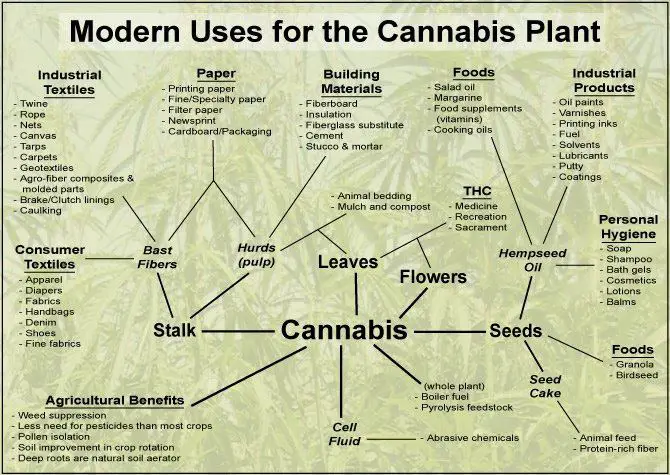
The many uses of hemp....
As hemp makes a comeback in the U.S. after a decades-long ban on its cultivation, scientists are reporting that fibers from the plant can pack as much energy and power as graphene, long-touted as the model material for supercapacitors. They’re presenting their research, which a Canadian start-up company is working on scaling up, at the 248th National Meeting & Exposition of the American Chemical Society (ACS), the world’s largest scientific society.
 Although hemp (cannabis sativa) and marijuana (cannabis sativa var. indica) come from a similar species of plant, they are very different and confusion has been caused by deliberate misinformation with far reaching effects on socioeconomics as well as on environmental matters.
Hemp is the most universally useful plant we have at our disposal. The history of mankind’s use of hemp can be traced way back in time to between about 5000 – 7000 BC.
Industrial hemp and hemp seed could transform the economy of the world States in a positive and beneficial way, and therefore should be exploited to its full potential, especially relating to energy storage.
David Mitlin, Ph.D., explains that supercapacitors are energy storage devices that have huge potential to transform the way future electronics are powered. Unlike today’s rechargeable batteries, which sip up energy over several hours, supercapacitors can charge and discharge within seconds. But they normally can’t store nearly as much energy as batteries, an important property known as energy density.
One approach researchers are taking to boost supercapacitors’ energy density is to design better electrodes. Mitlin’s team has figured out how to make them from certain hemp fibers — and they can hold as much energy as the current top contender: graphene.
“Our device’s electrochemical performance is on par with or better than graphene-based devices,” Mitlin says. “The key advantage is that our electrodes are made from biowaste using a simple process, and therefore, are much cheaper than graphene.”
The race toward the ideal supercapacitor has largely focused on graphene — a strong, light material made of atom-thick layers of carbon, which when stacked, can be made into electrodes. Scientists are investigating how they can take advantage of graphene’s unique properties to build better solar cells, water filtration systems, touch-screen technology, as well as batteries and supercapacitors. The problem is it’s expensive.
Mitlin’s group decided to see if they could make graphene-like carbons from hemp bast fibers. The fibers come from the inner bark of the plant and often are discarded from Canada’s fast-growing industries that use hemp for clothing, construction materials and other products. The U.S. could soon become another supplier of bast. It now allows limited cultivation of hemp, which unlike its close cousin, does not induce highs.
Since the 1950s, the United States has been lumped hemp into the same category of marijuana, and thus the extremely versatile crop was doomed in the United States. Hemp is technically from the same species of plant that psychoactive marijuana comes from. However, it is from a different variety, or subspecies that contains many important differences.
hemp Cannabis Based Batteries Could Change the Way We Store Energy Forever

Industrial hemp has very low Tetrahydrocannabinol (THC) levels, which is the principal psychoactive constituent. Compared to marijuana which is specifically cultivated for personal psychoactive use, it is nearly impossible to “get high” on hemp. Marijuana that can be smoked usually contains between 5-10% THC, industrial hemp contains about one-tenth of that. In order to get a psychoactive effect, one would need to smoke more than a dozen hemp cigarettes over a very short period of time to achieve any kind of psychoactive effect.
The reason for the low THC content in hemp is that most THC is formed in resin glands on the buds and flowers of the female cannabis plant. Industrial hemp is not cultivated to produce buds, and therefore lacks the primary component that forms the marijuana high. Furthermore, industrial hemp has higher concentrations of a chemical called Cannabidiol (CBD) that has a negative effect on THC and lessens its psychoactive effects when smoked in conjunction.
Scientists had long suspected there was more value to the hemp bast — it was just a matter of finding the right way to process the material.
“We’ve pretty much figured out the secret sauce of it,” says Mitlin, who’s now with Clarkson University in New York. “The trick is to really understand the structure of a starter material and to tune how it’s processed to give you what would rightfully be called amazing properties.”
His team found that if they heated the fibers for 24 hours at a little over 350 degrees Fahrenheit, and then blasted the resulting material with more intense heat, it would exfoliate into carbon nanosheets.
Mitlin’s team built their supercapacitors using the hemp-derived carbons as electrodes and an ionic liquid as the electrolyte. Fully assembled, the devices performed far better than commercial supercapacitors in both energy density and the range of temperatures over which they can work. The hemp-based devices yielded energy densities as high as 12 Watt-hours per kilogram, two to three times higher than commercial counterparts. They also operate over an impressive temperature range, from freezing to more than 200 degrees Fahrenheit.
“We’re past the proof-of-principle stage for the fully functional supercapacitor,” he says. “Now we’re gearing up for small-scale manufacturing.”
Governments have cooperated with powerful corporate lobbyists the ensure that hemp is lumped into the same category as marijuana. The primary reason is that hemp has too many abundant resources for fuel, housing, food, medicine that corporations cannot exploit. Think about how many polluting conglomerates would go down if hemp was permitted as a resource. The oil, pharmaceutical, supplement and constructions industry would need to radically shift their business model to survive.
Mitlin, who conducted the research while at the University of Alberta, acknowledges funding from Alberta Innovates Technology Futures, National Institute for Nanotechnology (Canada) and Alberta Livestock and Meat Agency.

Environmental Benefits of Hemp

* Hemp results in a 95.5% fuel-to-feed ratio when used for pyrolysis the thermochemical process that converts organic matter into fuel.
* Biomass has heating value of up to 8,000 BTU/lb., with virtually no residual sulphur or ash during combustion.
* Hemp is the #1 producer of biomass per acre in the world. Biomass energy expert Lynn Osburn estimates that 1 1/2 to 3 1/2 million acres of hemp would replace all of Canada’s fossil fuel demands.
* From 75°/O to 90% of all paper was made with hemp fiber until the late 1800’s.
* An acre of hemp will produce as much pulp for paper as 4,1 acres of trees over a 20 year period.
* The hemp paper-making process requires no dioxin-producing chlorine bleach and uses 75% to 85% less sulphur-based acid.
* Hemp paper is suitable for recycle use 7 to 8 times, compared with 3 times for wood pulp paper.
* Hemp produces the strongest, most durable natural soft-fiber on earth. Until the 1 820’s, up to 80% of all textiles and fabrics for clothes, canvas, linens and cordage were made principally from hemp.
* Hemp cloth is stronger, more durable, warmer and more absorbent than cotton. Best of all. ‘ grown in Canada, cotton cannot.
* An acre of land will produce 2 to 3 times as much fiber as cotton, about 1,000 Ibs. of fiber per acre.
* Hemp grown in most parts of Canada will require no herbicide, fungicide or insecticide applications. Up to ½ of all agricultural pesticides used in North America are applied to the cotton crop.
* Natural, organic hemp fiber breathes and is recyclable, unlike petroleum-based synthetic fibers.
* A fully mature hemp plant may contain 1/2 of its dry-weight in seed.
* Once hemp seed oil has been extracted, the remaining seed cake is second only to soya bean for protein content and is an excellent source of nutrition for either farm animals or humans.

Agricultural Benefits of Hemp

* England, France and Spain have all legalized low THC varieties of hemp for an agricultural crop. England planted 1,500 acres of hemp as a first year crop. Reports from England state that farmers are receiving in excess of 3,000$ per acre for their hemp crop.
* Low THC hemp is not suitable as a psychoactive drug.
* A Canadian report from the late 1800’s demonstrated that hemp works very well in rotation with bean and corn crops.
* In 1991 Ontario farmers receiver 290$ and 240$ per acre for grain corn and soya bean respectively.
* Hemp was grown successfully in Canada for over 100 years. For a period in the late 1800’s Canada produced ‘hi: of all England’s hemp requirements. At kite time, England was the largest hemp consumer in the world.
* In the 1930’s, a South Western Ontario newspaper reported that Canadian grown hemp was among the best in the world and far superior to tropical hemp.
* In Canada hemp can be grown successfully from our southern borders to approximately 60O North Latitude, the parallel that divides the North West Territories from the provinces. This remarkable range is possible due to hemp’s short growing season, usually 90 to 110 days.
* The hemp plant will reach a height of up to 5m (16ft.) and sink a main tap root down 1 ft. This tap root will draw nutrients from deep in the soil and make them available to subsequent crops when the hemp leaves are shed on the soil. This extensive root system also helps to alleviate the problem of soil compaction.
* Hemp is very easy on the soil and returns up to 60% of the nutrients it takes from the soil, when dried in the field.
* A report from Kentucky states that hemp was grown on the same land for 14 consecutive years without soil depletion or reduction in yield.
* Hemp is very economical crop to grow since it requires virtually no pesticide applications.
* Hemp is also relatively drought-resistant and has been relied upon several times during drought-induced famine for its high protein seed.
* Hemp is very resistant to increased UV radiation and should not suffer decreased yields, unlike soya bean and corn.
Article Sources:

By Marco Torres
Guest Writer for Wake Up World
acs.org
sacredearth.com
preventdisease.com
cannabisculture.com

Tuesday, July 2, 2013

HEMP - RT NEWS - ABBY MARTIN

Abby Martin takes a look at the real reason why hemp 
is illegal in the US, the truth might surprise you.


MAJOR USES OF INDUSTRIAL HEMP:
The three primary components of industrial hemp, seeds, fiber, and hurds, and have a multitude of beneficial industrial uses (historical, current, and potential), including:

SEEDS - the seeds are a highly nutritious food for both humans and animals, and yield hempseed oil for nutrition, soaps, cosmetics, paints, varnishes, etc.

· Food:
Hemp oil is mostly valued for its high content of polyunsaturated fatty acids (PUFAs). At 80%, the hempseed oil contains the highest concentration of total PUFAs in the plant kingdom, the majority of which are the two essential fatty acids (EFA) linoleic acid (omega-6) and alpha-linolenic acid (omega-3). Its balanced EFA ratio, which closely matches human nutritional requirements, makes hemp oil a suitable ingredient in a variety of food, supplement and personal care products. Added to the value of hemp oil is the presence of a rare fatty acid, gamma-linolenic acid (GLA), which is used to treat ailments such as neurodermatitis, arthritis and premenstrual syndrome.

· Chemicals:
Like flax seed oil (also called linseed oil) or cottonseed oil, hempseed oil can be processed into a number of valuable products such as biodiesel, soaps, cosmetics, paints varnishes, etc. 

FIBER - the durable natural fiber from the stalks can be used for textiles, clothing, canvas, rope, cordage, for archival grade paper, & composite fibers replacing heavier toxic fibers (e.g. fiberglass), and building materials made with recycled plastic and fiber.Click picture for latger view

· Textiles, Rope & Cordage:
The strength, absorbency and comfort of hemp fiber is unmatched by any other natural fiber. Historically, hemp rope  and canvas was extensively used on large sailing ships due to its strength, resistance to salt water rot and UV resistance. The original "Levis" brand jeans earned their reputation for strength and durability while made of hemp canvas.

Nowadays hemp textiles are increasingly viewed as an environmentally sound alternative to cotton and dominate the alternative natural fiber market in clothing and fashion wear.  Due to its porosity and absorbency, hemp fabrics take dyeing very well, and are compatible with natural mineral and plant based dyes.  Currently, everything from diapers to bed-sheets are available made of hemp and hemp blend fabrics. Major manufacturers such as Nike, Two-Star Dog, Indigenous Designs, Artisan Gear and others enjoy success with their various hemp textile products.

· Composite Fibers:
Natural fiber composites are now emerging as a realistic alternative to wood-filled and glass-reinforced composites, especially in automobiles. The can deliver the same performance at lower weights, or be 25-30% stronger at the same weight. Moreover, they exhibit a favorable non-brittle fracture on impact, another important requirement in the passenger compartment.

The aerospace and aviation industries are also attracted to natural fibers due to the reduced toxicity of synthetic substances when they burn. It has been claimed that many people have died in what would have been survivable crashes, except for the fumes inhaled from toxic substances burning.

HURDS - from the woody core of the stalks, and the bulk of that stalk, can be used for paper, animal bedding, oil absorbent, soil amendment, chemicals, plastics, & fuels (ethanol, methane, co-firing with coal), etc.

· Paper:
During the processing of hemp, a large quantity of waste material is produced. It was recognized rather early that this material could be used as a feedstock for papermaking. In 1916 the USDA published a report entitled "Hemp Hurds as a Papermaking Material" in which the authors used chemical pulping methods to reduce the material to fibers.  After subsequent bleaching, the material was formed into paper.  The resulting paper was judged to be of a sufficient quality to meet the specifications of the US Government Printing Office. In fact, the strength and fold endurance exceeded a typical wood-based material produced at that time. The fiber yield from the hurds ranged between 35 and 44%, which, when corrected for the weight of dirt, corresponds to 38 to 47% yield. A chemical analysis of the hurds suggests they are 55% cellulose and 25% lignin, similar to many hardwoods. With modern process optimization, it is likely that the fiber yield would be nearly 50%.

The value of the bast fibers as a component in paper pulp is widely acknowledged. An analysis of the bast fibers shows that they are composed of 70% cellulose and 8% lignin. Given that this material is chemically quite different than the hurds, it likely would have to be processed separately, but would likely have a 70% yield to fiber. If one does a weighted average of 50% yield for the hurds and 70% for the bast fibers, one obtains a value of 55% fiber yield from retted hemp stalks.

· Plastics:
Hemp hurds also serve as a renewable source of raw material for the production of plastics, and are much cleaner and more environmentally attractive than petroleum.

· Fuels:
Use of the hemp hurds as a biomass for fuel production is attractive for a number of reasons:

Biomass-produced fuels, animal feeds and industrial chemicals are economically competitive, for example: (1.) A mixed alcohol fuel would sell for 70 cents a gallon today compared to 80-90 cents a gallon for MTBE and $1.10 to $1.20 for ethanol. (2.) Biomass-derived ketones such as acetone can sell for 65 cents a gallon rather than the current market price of $2 a gallon for ketones from conventional petrochemical technology. (3.) Carboxylic acids from biomass technology can sell for 10 cents a pound compared to 20 cents a pound for the conventionally produced version.

Unlike ethanol mixtures, mixed alcohol fuels ship compatibly with gasoline in pipelines.

Chemicals produced from biomass are all oxygenates, which are difficult to produce from oxygen-free petroleum. Introducing oxygen into petroleum increases risk of explosion, compared to the inherent safety of biomass oxygenates. 

Mixed alcohol fuels can be added directly to motor fuel. They're an alternative oxygenate for making clean-burning fuels and especially attractive in light of the recent California ban on methyl tertiary butyl ether (MTBE ) that has contaminated ground- and drinking water.

Biomass-derived fuels do not contribute to global warming because the carbon dioxide cycles, the CO2 released to the atmosphere during biomass combustion, is offset by the CO2 taken from the atmosphere (through photosynthesis) by the plants used to create the biomass.

ADDITIONAL INFORMATION
NOTE: Above is only a brief summary of the beneficial uses and attributes of industrial hemp. More data is readily available by typing "industrial hemp" into any Internet search engine, and following the links to a multitude of sites. We particularly recommend these:

North American Industrial Hemp Council
www.naihc.org
Hemp Industries Association
www.thehia.org
VoteHemp.com
www.votehemp.com
Kentucky Hemp Growers Cooperative Association
www.hempgrowers.com
HEMPTECH The Industrial Hemp Information Network
www.hemptech.com

Source: http://www.azhemp.org/Archive/Package/Uses/uses.html


Friday, January 25, 2013

THE NEW INDUSTRY


Hemp seeds make biodiesel fuel. 
Hemp biomass makes ethanol. 
Hemp makes more biofuel than any other plant. 
When we allow farmers to grow hemp for its best fuel attributes, regardless of THC content, we will realign our whole economic system by replacing fossil fuel with biofuel. 
The laws against marijuana are wrong. Marijuana prohibition is a conspiracy from the rulers of this world today, the very wealthy, the oligarchy, to keep the wealth in their hands.
 Petroleum is capital intensive, hemp is naturally decentralized. 
Very few people in this world have enough capital, enough money, to compete in the petrochemical industries. You can buy 10 hemp seed presses for the price of one small car. It takes billions of dollars to build an oil refinery, and they are incredibly toxic. 
Hemp will create untold multitudes of jobs and return economic control to the people. 
No more wars for petroleum when we start to use hemp again, instead. 
Hemp can lead the way to economic and ecological sustainability, and help save the remnants of our biosphere's precious heritage, the diversity of life that we should bequeath to future generations. 
SOURCE and more info: - www.hemp.org

Monday, November 26, 2012

Emperor of Hemp: The Jack Herer Story

Emperor of Hemp: The Jack Herer Story

“The earliest known woven fabric was apparently of hemp, which began to be worked in the eighth millennium (8,000-7,000 B.C.).” (The Columbia History of the World, 1981, page 54.)


"The Prophet of Pot" reveals the propaganda to criminalize hemp use.

Here you will find information about Jack Herer, maintained by Jeannie Herer. This website is used as a resource to keep you informed about Cannabis Hemp and the relevance it plays in our culture. Please share your comments to the articles and send us a message using the contact form.


Jack and Jeannine Herer have provided a copy to the BOOK, The Emperor Wears No Clothes, you will find the tab at his above site. 

 Thank You Jack!

 In memory of Jack Herer

 Jack Herer was a pro-cannabis (marijuana) and hemp activist. He wrote two books, the aforementioned The Emperor Wears No Clothes and Grass. There has also been a documentary made about his life called, The Emperor of Hemp.

He believed that the cannabis plant should be decriminalized because it has been shown to be a renewable source of fuel, food, and medicine that can be grown in virtually any part of the world. He further asserts that the U.S. government deliberately hides the proof of this.

A specific strain of cannabis[2] has been named after Jack Herer in honor of his work. This strain has won several awards, including the 7th High Times Cannabis Cup. Jack Herer was also inducted into the Counterculture Hall of Fame at the 16th Cannabis Cup in recognition of his first book.[3]

Herer ran for United States President twice, in 1988 (1,949 votes) and 1992 (3,875 votes) as the Grassroots Party candidate.

Health Problems and Death

In July 2000, Herer suffered a minor heart attack and a major stroke, resulting in difficulties speaking and moving the right side of his body.[4] Herer mostly recovered, and claimed in May 2004 that treatment with the Amanita muscaria, a psychoactive mushroom, was the "secret".[5]

On September 12, 2009 Herer suffered another heart attack while backstage at the Hempstalk Festival in Portland, Oregon.[6] He spent nearly a month in critical condition in a Portland hospital, including several days in a medically induced coma. He was discharged to another facility on October 13, 2009. Paul Stanford of The Hemp and Cannabis Foundation said "He is waking up and gazing appropriately when someone is talking... but he is not really communicating in any way."[7] He died aged 70 on April 15, 2010 in Eugene, Oregon, from complications related to the September 2009 heart attack.[8][9]
Herer was buried at the Eden Memorial Park Cemetery in Mission Hills, California.

Source:  http://en.wikipedia.org/wiki/Jack_Herer


Tuesday, November 13, 2012

Friday, June 15, 2012