Montana Hemp Law
Year Passed: 2001
Summary: The Montana Legislature approved Senate Bill 261 recognizing industrial hemp having no more than 0.3 percent THC as an "agricultural crop." This legislation also establishes licensing procedures to allow local farmers to grow hemp commercially. An amendment to the bill requests the federal government to issue a "waiver that will allow this act to be effective without federal preemption."
Statute: Mont. Code. Ann. §§ 80-18-101-111 (2015)
Soruce: http://norml.org/legal/item/montana-hemp-law
Montana is one of 13 states to legalize a commercial industrial hemp
program. A provision in the U.S. Farm Bill allows universities and state
agriculture departments to begin cultivating hemp for research.
Production is limited to pilot projects.
Summary: The Montana Legislature approved Senate Bill 261 recognizing industrial hemp having no more than 0.3 percent THC as an "agricultural crop." This legislation also establishes licensing procedures to allow local farmers to grow hemp commercially. An amendment to the bill requests the federal government to issue a "waiver that will allow this act to be effective without federal preemption."
Statute: Mont. Code. Ann. §§ 80-18-101-111 (2015)
Soruce: http://norml.org/legal/item/montana-hemp-law
Facts About Montana's Legalization of Industrial Hemp Farming
Tuesday, 09 Feb 2016
Montana is one of 13 states to legalize a commercial industrial hemp
program. A provision in the U.S. Farm Bill allows universities and state
agriculture departments to begin cultivating hemp for research.
Production is limited to pilot projects.
The federal government classifies hemp as an illegal drug under the
Controlled Substances Act. Hemp contains trace amounts of the same
hallucinogen found in marijuana, but it’s genetically different.
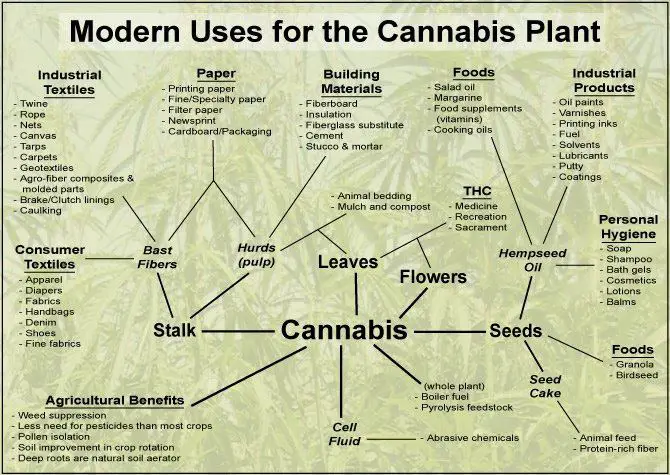
Hemp can be used to make fabric, food, fuel, plastics, construction
material, and paper. Industrial hemp production can also help the
economies of rural areas.
Montana’s law states that industrial hemp that does not contain more than 0.3 percent tetrahydrocannabinol (THC) is considered an agricultural product.
An individual in the state “may plant, grow, harvest, process, sell or buy industrial hemp" if the industrial hemp does not contain more than 0.3 percent THC, the law says.
The law requires industrial hemp growers to be licensed by the state of Montana.
Also, it creates an affirmative defense to prosecution under criminal code for marijuana possession or cultivation.
Montana’s law states that industrial hemp that does not contain more than 0.3 percent tetrahydrocannabinol (THC) is considered an agricultural product.
An individual in the state “may plant, grow, harvest, process, sell or buy industrial hemp" if the industrial hemp does not contain more than 0.3 percent THC, the law says.
The law requires industrial hemp growers to be licensed by the state of Montana.
Also, it creates an affirmative defense to prosecution under criminal code for marijuana possession or cultivation.
In 2009, The Associated Press reported
the state had granted a Bozeman woman its first license for an
industrial hemp-growing operation. Laura Murphy said she wanted to
develop a domestic market for the plant despite federal law barring its
cultivation.
The Montana Hemp Council “works to educate and inform Montanans about the benefits, history, uses, versatility, and politics of industrial and agricultural hemp.” On its website, the council emphasizes that hemp is not marijuana: “They are the same genesis and species, just as a St. Bernard and a Chihuahua are. The plants have evolved over millennia to serve different purposes. Hemp has a low THC level that could never get a person high. Any marijuana grown near hemp plants would cross-pollinate turning pot plants into hemp.”
The Montana Hemp Council “works to educate and inform Montanans about the benefits, history, uses, versatility, and politics of industrial and agricultural hemp.” On its website, the council emphasizes that hemp is not marijuana: “They are the same genesis and species, just as a St. Bernard and a Chihuahua are. The plants have evolved over millennia to serve different purposes. Hemp has a low THC level that could never get a person high. Any marijuana grown near hemp plants would cross-pollinate turning pot plants into hemp.”
Source: http://
www.newsmax.com/FastFeatures/legalizing-weed-montana-industrial/2016/02/09/id/713514/#ixzz4FOGWPB49
Other Sources of info on Montana Industrial Hemp: http://crrh.org/news/montana-issues-industrial-hemp-growing-state-license
AN ACT AUTHORIZING THE PRODUCTION OF INDUSTRIAL HEMP AS AN AGRICULTURAL CROP;
REQUIRING THAT A LICENSE BE OBTAINED PRIOR TO GROWING INDUSTRIAL HEMP; REQUIRING THAT
THE DEPARTMENT OF AGRICULTURE BE NOTIFIED WHEN GROWING OR SELLING INDUSTRIAL HEMP;
PROVIDING RULEMAKING AUTHORITY TO THE DEPARTMENT OF AGRICULTURE; PROVIDING FOR THE
DISPOSITION OF FEES; PROVIDING AN AFFIRMATIVE DEFENSE FOR THE POSSESSION OR CULTIVATION
OF MARIJUANA; PROVIDING AN EXEMPTION TO CRIMINAL POSSESSION OF DANGEROUS DRUGS AND
CRIMINAL PRODUCTION OR MANUFACTURE OF DANGEROUS DRUGS FOR INDUSTRIAL HEMP
PRODUCTION AS AN AGRICULTURAL CROP; REQUIRING THE DEPARTMENT OF AGRICULTURE TO
REQUEST A CHANGE OR WAIVER IN FEDERAL LAW; AND AMENDING SECTION 45-9-108, MCA.
BE IT ENACTED BY THE LEGISLATURE OF THE STATE OF MONTANA:
Section 1. Definitions. As used in [sections 1 through 7], the following definitions apply:
(1) "Industrial hemp" means all parts and varieties of the plant Cannabis sativa L. containing no greater than 0.3% tetrahydrocannabinol.
(2) "Marijuana" means all plant material from the genus cannabis containing tetrahydrocannabinol (THC) or seeds of the genus capable of germination.
Section 2. Industrial hemp authorized as agricultural crop. Industrial hemp that has no more than 0.3% tetrahydrocannabinol is considered an agricultural crop in this state. Upon meeting the requirements of [section 3], an individual in this state may plant, grow, harvest, possess, process, sell, or buy industrial hemp if the industrial hemp does not contain more than 0.3% tetrahydrocannabinol.
Section 3. Industrial hemp -- licensing. (1) An individual growing industrial hemp for commercial purposes shall apply to the department for a license on a form prescribed by the department.
(2) The application for a license must include the name and address of the applicant and the legal description of the land area to be used for the production of industrial hemp.
(3) The department shall require each first-time applicant for a license to file a set of the applicant's fingerprints, taken by a law enforcement officer, and any other information necessary to complete a statewide and nationwide criminal history check with the criminal investigation bureau of the department of justice for state processing and with the federal bureau of investigation for federal processing. All costs associated with the criminal history check are the responsibility of the applicant. Criminal history records provided to the department under this section are confidential. The department may use the records only to determine if an applicant is eligible to receive a license for the production of industrial hemp. If the applicant has completed the application process to the satisfaction of the department, the department shall issue the license, which is valid until December of that year. An individual licensed under this section is presumed to be growing industrial hemp for commercial purposes.
(4) The licensing requirements of [sections 1 through 7] do not apply to employees of the agricultural experiment station or the Montana state university-Bozeman extension service involved in research and extension-related activities.
Section 4. Industrial hemp production -- notification requirements. (1) Each licensee shall file with the department:
(a) documentation showing that the seeds planted are of a type and variety certified to have no more than 0.3% tetrahydrocannabinol; and
(b) a copy of any contract to grow industrial hemp.
(2) Each licensee shall notify the department of the sale or distribution of any industrial hemp grown by the licensee, including the name and address of the person receiving the industrial hemp.
Section 5. Rulemaking authority. The department shall adopt rules that include but are not limited to:
(1) testing of the industrial hemp during growth to determine tetrahydrocannabinol levels;
(2) supervision of the industrial hemp during its growth and harvest;
(3) assessment of a fee that is commensurate with the costs of the department's activities in licensing, testing, and supervising industrial hemp production; and
(4) any other rules and procedures necessary to carry out [sections 1 through 7].
Section 6. Disposition of fees. All fees assessed as provided in [section 5] must be deposited with the state treasurer to the credit of the state special revenue fund for the use of the department for administering and enforcing [sections 1 through 7].
Section 7. Affirmative defense for possession or cultivation of marijuana. (1) It is an affirmative defense to a prosecution for the possession or cultivation of marijuana under 45-9-102, 45-9-103, and 45-9-110 that:
(a) the defendant was growing industrial hemp pursuant to [sections 1 through 7];
(b) the defendant had valid applicable controlled substances registrations from the United States department of justice, drug enforcement administration; and
(c) the defendant fully complied with all of the conditions of the controlled substances registration.
(2) This section is not an affirmative defense to a charge of criminal sale or distribution of marijuana.
Section 8. Section 45-9-108, MCA, is amended to read:
"45-9-108. Exemptions. (1) The provisions of 45-9-107 do not apply to:
(a) a drug manufacturer licensed by the state;
(b) a person authorized by rules adopted by the board of pharmacy to possess the combination of substances;
(c) a person employed by or enrolled as a student in a college or university within the state who possesses any combination of substances listed in 45-9-107 for the purposes of teaching or researchwhich that is authorized by the
college or university.
(2) The board of pharmacy shall adopt, amend, or repeal rules in accordance with the Montana Administrative Procedure Act to authorize the processing of any combination of the substances listed in 45-9-107 whenever it determines that there is a legitimate need and that the substances will be used for a lawful purpose.
(3) The provisions of 45-9-102, 45-9-103, and 45-9-110 do not apply to [section 2]."
Section 9. Request for federal change or waiver. The department shall send a copy of [this act], along with a request for a change in federal law or a waiver that will allow [this act] to be effective without federal preemption, to the Montana congressional delegation and the director of the drug enforcement administration.
Section 10. Codification instruction. [Sections 1 through 7] are intended to be codified as an integral part of Title 80, and the provisions of Title 80 apply to [sections 1 through 7].
www.newsmax.com/FastFeatures/legalizing-weed-montana-industrial/2016/02/09/id/713514/#ixzz4FOGWPB49
Other Sources of info on Montana Industrial Hemp: http://crrh.org/news/montana-issues-industrial-hemp-growing-state-license
Montana
Mont. Code Anno., § 80-18-101 to 80-18-111- States that industrial hemp that does not contain more than 0.3 percent tetrahydrocannabinol is an agricultural product.
- "…an individual in this state may plant, grow, harvest, possess, process, sell, or buy industrial hemp if the industrial hemp does not contain more than 0.3% tetrahydrocannabinol."
- Requires industrial hemp growers be licensed by the state.
- Creates an affirmative defense to prosecution under criminal code for marijuana possession or cultivation.
************************
2001 Montana Legislature
SENATE BILL NO. 261
INTRODUCED BY C. CHRISTIAENS, E. CLARK, EGGERS, EKEGREN, G. FORRESTER, GLASER, HARGROVE,
HARRINGTON, JERGESON, MANGAN, MASOLO, MCNUTT, NELSON, RIPLEY, ROUSH, SCHMIDT, TASH,
TESTER, TOOLE, J. WHITAKER, JACOBSON
BE IT ENACTED BY THE LEGISLATURE OF THE STATE OF MONTANA:
Section 1. Definitions. As used in [sections 1 through 7], the following definitions apply:
(1) "Industrial hemp" means all parts and varieties of the plant Cannabis sativa L. containing no greater than 0.3% tetrahydrocannabinol.
(2) "Marijuana" means all plant material from the genus cannabis containing tetrahydrocannabinol (THC) or seeds of the genus capable of germination.
Section 2. Industrial hemp authorized as agricultural crop. Industrial hemp that has no more than 0.3% tetrahydrocannabinol is considered an agricultural crop in this state. Upon meeting the requirements of [section 3], an individual in this state may plant, grow, harvest, possess, process, sell, or buy industrial hemp if the industrial hemp does not contain more than 0.3% tetrahydrocannabinol.
Section 3. Industrial hemp -- licensing. (1) An individual growing industrial hemp for commercial purposes shall apply to the department for a license on a form prescribed by the department.
(2) The application for a license must include the name and address of the applicant and the legal description of the land area to be used for the production of industrial hemp.
(3) The department shall require each first-time applicant for a license to file a set of the applicant's fingerprints, taken by a law enforcement officer, and any other information necessary to complete a statewide and nationwide criminal history check with the criminal investigation bureau of the department of justice for state processing and with the federal bureau of investigation for federal processing. All costs associated with the criminal history check are the responsibility of the applicant. Criminal history records provided to the department under this section are confidential. The department may use the records only to determine if an applicant is eligible to receive a license for the production of industrial hemp. If the applicant has completed the application process to the satisfaction of the department, the department shall issue the license, which is valid until December of that year. An individual licensed under this section is presumed to be growing industrial hemp for commercial purposes.
(4) The licensing requirements of [sections 1 through 7] do not apply to employees of the agricultural experiment station or the Montana state university-Bozeman extension service involved in research and extension-related activities.
Section 4. Industrial hemp production -- notification requirements. (1) Each licensee shall file with the department:
(a) documentation showing that the seeds planted are of a type and variety certified to have no more than 0.3% tetrahydrocannabinol; and
(b) a copy of any contract to grow industrial hemp.
(2) Each licensee shall notify the department of the sale or distribution of any industrial hemp grown by the licensee, including the name and address of the person receiving the industrial hemp.
Section 5. Rulemaking authority. The department shall adopt rules that include but are not limited to:
(1) testing of the industrial hemp during growth to determine tetrahydrocannabinol levels;
(2) supervision of the industrial hemp during its growth and harvest;
(3) assessment of a fee that is commensurate with the costs of the department's activities in licensing, testing, and supervising industrial hemp production; and
(4) any other rules and procedures necessary to carry out [sections 1 through 7].
Section 6. Disposition of fees. All fees assessed as provided in [section 5] must be deposited with the state treasurer to the credit of the state special revenue fund for the use of the department for administering and enforcing [sections 1 through 7].
Section 7. Affirmative defense for possession or cultivation of marijuana. (1) It is an affirmative defense to a prosecution for the possession or cultivation of marijuana under 45-9-102, 45-9-103, and 45-9-110 that:
(a) the defendant was growing industrial hemp pursuant to [sections 1 through 7];
(b) the defendant had valid applicable controlled substances registrations from the United States department of justice, drug enforcement administration; and
(c) the defendant fully complied with all of the conditions of the controlled substances registration.
(2) This section is not an affirmative defense to a charge of criminal sale or distribution of marijuana.
Section 8. Section 45-9-108, MCA, is amended to read:
"45-9-108. Exemptions. (1) The provisions of 45-9-107 do not apply to:
(a) a drug manufacturer licensed by the state;
(b) a person authorized by rules adopted by the board of pharmacy to possess the combination of substances;
(c) a person employed by or enrolled as a student in a college or university within the state who possesses any combination of substances listed in 45-9-107 for the purposes of teaching or research
(2) The board of pharmacy shall adopt, amend, or repeal rules in accordance with the Montana Administrative Procedure Act to authorize the processing of any combination of the substances listed in 45-9-107 whenever it determines that there is a legitimate need and that the substances will be used for a lawful purpose.
(3) The provisions of 45-9-102, 45-9-103, and 45-9-110 do not apply to [section 2]."
Section 9. Request for federal change or waiver. The department shall send a copy of [this act], along with a request for a change in federal law or a waiver that will allow [this act] to be effective without federal preemption, to the Montana congressional delegation and the director of the drug enforcement administration.
Section 10. Codification instruction. [Sections 1 through 7] are intended to be codified as an integral part of Title 80, and the provisions of Title 80 apply to [sections 1 through 7].
- END -
*******************